Digital Project Case Study: Scaling Public Transit: High-Concurrency Real-Time Bus Booking Ecosystem
Technologies Used
Implementation
Architecture Design -> Database Transaction Modeling -> Multi-Portal Development -> GPS Dead Reckoning Engine Calibration -> Field Testing & Launch
Project Overview
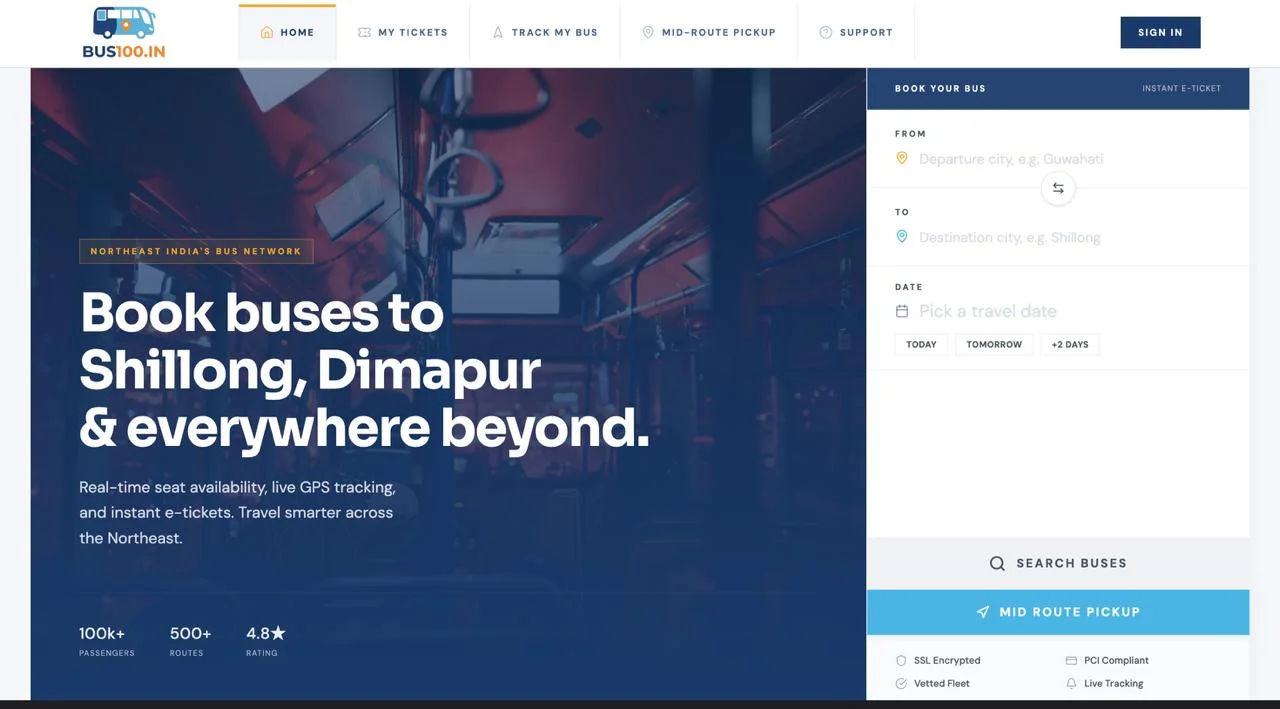
Discover how Sitemaker Lab built a real-time transit ecosystem featuring offline-ready GPS tracking, 0% double-bookings, and robust multi-role portals.
Client & Industry
This project was developed for a client in the Enterprise Solutions sector. Our team at Sitemaker Lab specializes in delivering custom digital solutions that drive measurable business outcomes for startups, SMBs, and enterprises across various industries.
Challenge
Managing modern transit fleets involves severe coordination friction among five critical entities: passengers, drivers, bus owners, stand managers, and super admins. Legacy systems struggle with frequent double-bookings on high-traffic routes, lack precise real-time vehicle mapping due to cellular dropouts, and fail to calculate dynamic proportional fares for on-demand roadside pickups. Sitemaker Lab was tasked with building a unified, low-latency ecosystem capable of managing high-volume transactional flows and fluid geospatial tracking.
Implementation
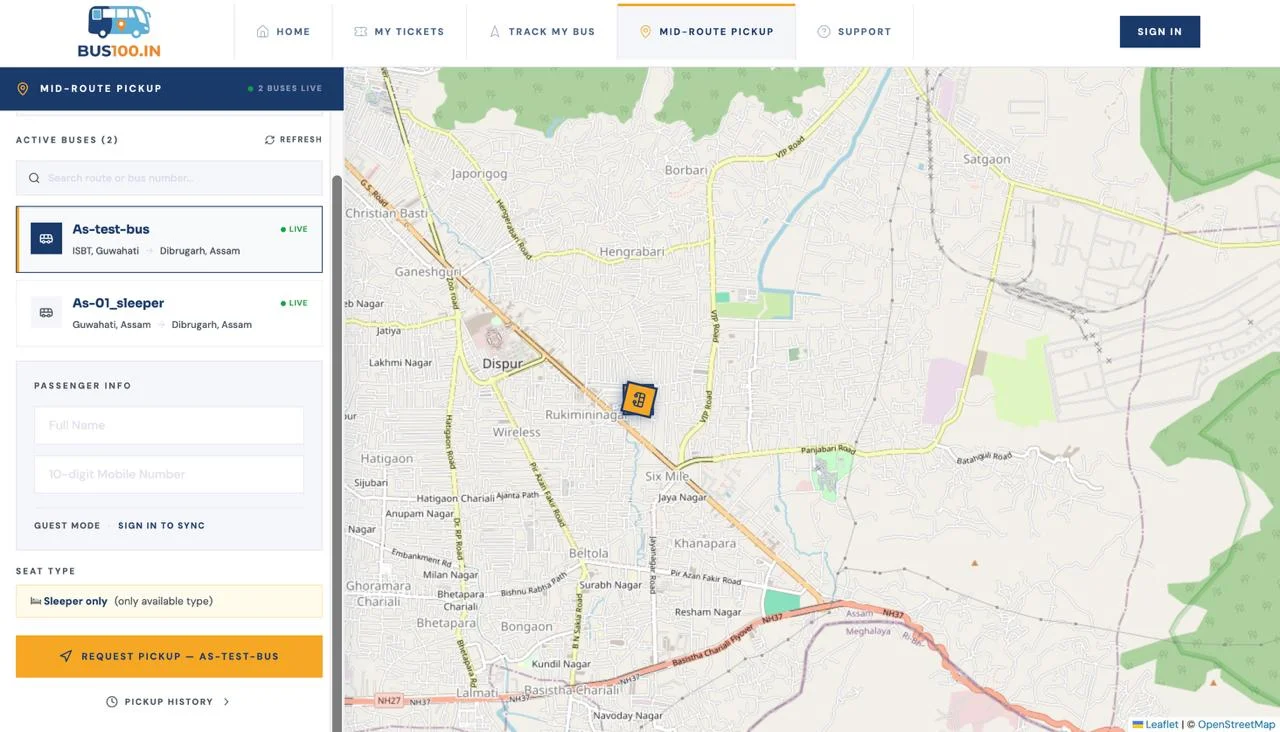
Integrating five separate portals required a robust Role-Based Access Control (RBAC) middleware using dual-token JWT rotation (access and refresh tokens). The passenger web application, built with Vite and React, handles intense user traffic and dynamic route queries. Simultaneously, the three corporate dashboards—Super Admin, Bus Owner, and Stand Manager—were crafted using Next.js (App Router) to deliver instant server-rendered analytics and complete fleet operational control. Roadside pickups were optimized by a custom spatial algorithm that calculates proportional remaining distances, creating dynamic, fair-pricing rates on the fly while instantly pushing socket alerts to targeting driver screens.
Engineered for high-stress operational environments, the mobile application for drivers was built using React Native and Expo, incorporating background location services that execute seamlessly even when the mobile device is locked. To minimize data consumption and battery drainage, GPS coordinates are cached locally in AsyncStorage during network drops and batch-uploaded dynamically once a stable connection is re-established. On the server side, scheduled background cron jobs run concurrently to automatically release expired seat locks, clear system caches, and aggregate daily financial summaries, ensuring optimal system performance and consistent 99.9% database availability.
Solution
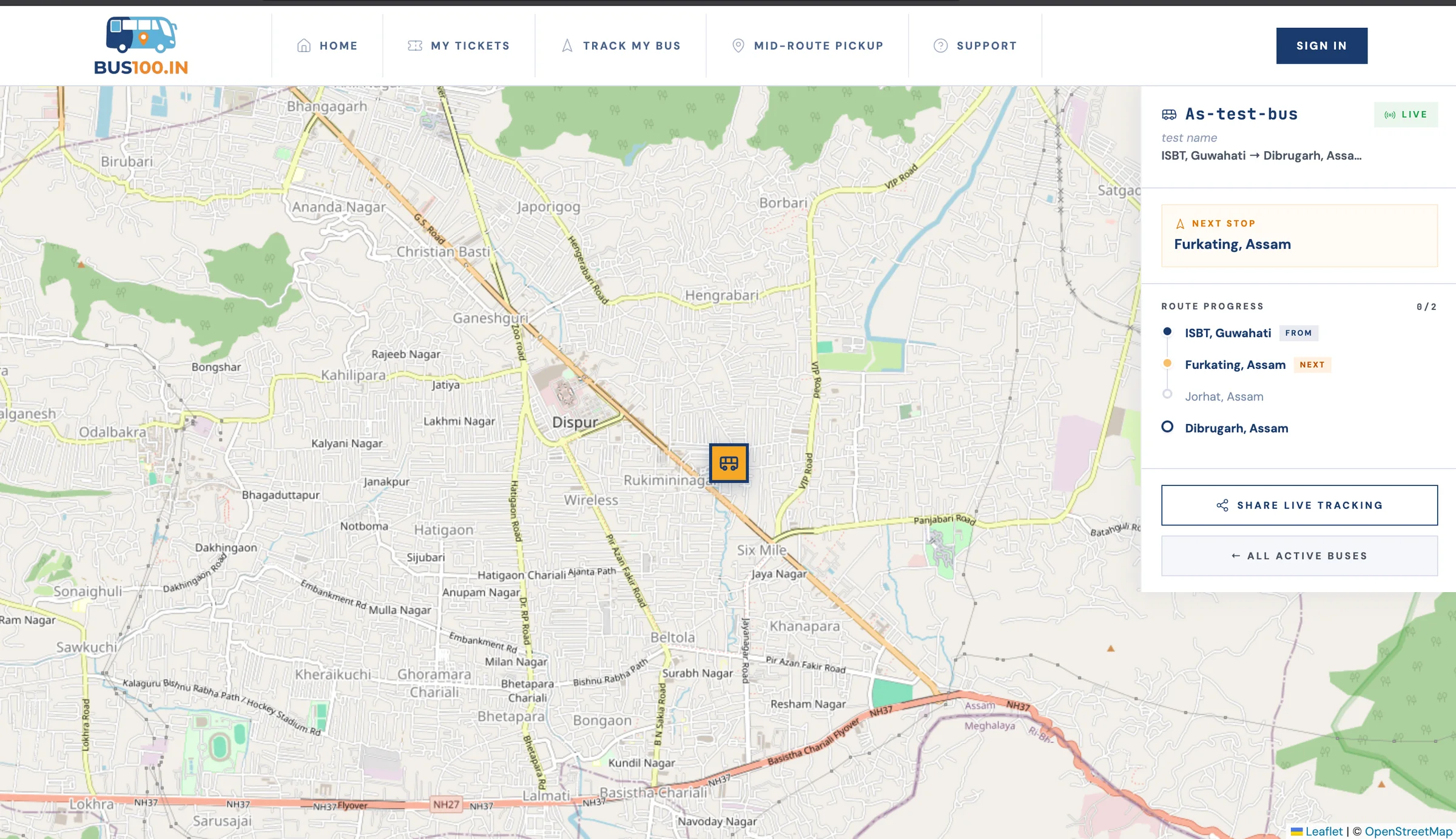
We engineered a highly robust, multi-tenant system using a Node.js/TypeScript backend powered by PostgreSQL and Prisma ORM. To guarantee zero double-bookings, we utilized Prisma's `$transaction` API and database-level unique constraints, establishing a strict 5-minute checkout reservation timer integrated with secure Razorpay webhook reconciliation. Real-time GPS tracking is powered by WebSockets (Socket.io), featuring an advanced client-side interpolation system using requestAnimationFrame, Exponential Moving Average heading smoothing, and dead reckoning to render butter-smooth vehicle movements on Leaflet maps. The system handles offline states through an AsyncStorage-backed background synchronization queue in the driver’s React Native app.
Results & Impact
"The deployment transformed fleet operations with zero seat-booking conflicts recorded post-launch. Live vehicle tracking accuracy reached sub-second latency under standard network conditions, and the custom offline-first sync mechanism eliminated coordinate loss over patchy highway zones, significantly improving dispatch intelligence and operational efficiency."
This project was delivered by our web design team in Guwahati, focusing on performance and local SEO. Explore our digital services or view more case studies.